Table of Contents
- Why You’ll Love This Carrot Cake
- Tips for Perfect Carrot Cake
- Substitutions and Variations
- Storage and Freezing
- Serving Suggestions
- Ingredients
- Instructions
- Frequently Asked Questions
This carrot cake recipe delivers moist, aromatic slices without any flour or sugar. Fresh carrots and bright oranges provide natural sweetness, making this treat a healthy choice for dessert or breakfast.
Every bite of this carrot cake is packed with warm cinnamon, crunchy walnuts, and citrus zest. The recipe comes together in one bowl and bakes in under an hour, so you can enjoy homemade cake even on busy weeknights.
Because this carrot cake relies on whole-food ingredients, it stays tender and flavorful for days. Whether you need a gluten-free dessert or simply want to cut refined sugar, this dish will satisfy every craving.
Why You’ll Love This Carrot Cake
This carrot cake is naturally gluten-free and refined-sugar-free, yet it tastes like a classic bakery favorite. The grated carrots release moisture that keeps each slice soft for several days, while the orange zest adds a sunny aroma that fills your kitchen.
Walnuts give a satisfying crunch and healthy fats, making this treat more filling than typical cakes. Because the recipe uses only seven main ingredients, you can whip it up whenever the urge for something sweet strikes.
Parents appreciate that this carrot cake sneaks vegetables and fruit into dessert without artificial colors or flavors. Kids enjoy the gentle sweetness and never guess the cake is flourless.
Nutrition-wise, each serving provides fiber, vitamin A, and omega-3s from the walnuts. You get indulgence without the post-dessert slump that comes from refined carbs.
If you are following a paleo or low-glycemic lifestyle, this carrot cake fits perfectly. It also travels well, so pack slices for picnics or lunchboxes.
Tips for Perfect Carrot Cake
Use the fine holes on a box grater so the carrots melt into the batter and release maximum moisture. Larger shreds can create a denser texture.
Room-temperature eggs and coconut oil blend more smoothly, preventing the batter from separating. Set the ingredients out 30 minutes before mixing.
Do not over-mix once the dry ingredients go in; a few gentle folds keep the crumb light. Over-working the batter can make this carrot cake tough.
Check doneness at 35 minutes; ovens vary. A toothpick inserted in the center should come out with a few moist crumbs, not wet batter.
Let the cake cool completely before slicing. Warm slices may crumble, but cooled pieces hold together beautifully.
Substitutions and Variations
Swap walnuts for pecans or pumpkin seeds if you need a nut-free version. Both options keep the pleasant crunch that defines this carrot cake.
Instead of coconut oil, use avocado oil or melted ghee. The flavor profile changes slightly, but the moist crumb remains the same.
Add two crushed dates for extra natural sweetness without refined sugar. Dates also boost potassium and fiber.
Turn the batter into muffins by dividing it among twelve lined cups. Bake at the same temperature for 20-25 minutes and you have portable snacks.
Stir in a handful of raisins or dried cranberries for bursts of chewiness. Just remember that dried fruit adds natural sugars, so adjust portion size accordingly.
For a festive touch, fold in a teaspoon of ground cardamom or nutmeg alongside the cinnamon. The warm spices complement the orange zest perfectly.
If you prefer a dairy-free frosting, whip coconut cream with a touch of vanilla and spread it on the cooled cake. Learn more about the history of carrot cake on Wikipedia.
Storage and Freezing
Wrap leftover slices tightly in plastic wrap and refrigerate for up to five days. The flavors actually deepen after a day, making this carrot cake even tastier.
For longer storage, cut the cooled cake into portions and freeze in a single layer on a baking sheet. Once firm, transfer the pieces to a freezer bag for up to three months.
Thaw slices overnight in the refrigerator or warm briefly in a 300°F oven. Avoid microwaving, which can make the texture rubbery.
Always label the container with the date so you know how long this treat has been stored.
Serving Suggestions
Pair a slice of this carrot cake with a dollop of plain Greek yogurt for added protein. The tangy yogurt balances the sweetness of the oranges beautifully.
Dust the top with shredded coconut or a few extra walnut pieces for visual appeal. A light sprinkle of cinnamon completes the look.
Serve the cake slightly warm with a scoop of coconut milk ice cream for an indulgent yet still healthy dessert.
At brunch, offer thin slices alongside scrambled eggs and fresh fruit. The carrots and nuts provide staying power until lunch.
Pack individual muffins in lunchboxes for a naturally sweet treat that needs no added sugar.
Try a quick glaze made from orange juice and a pinch of coconut flour if you want a pretty finish without refined sugar. Read about the nutritional benefits of oranges on Wikipedia.
Remember to check out more delicious recipes for more healthy baking ideas and more delicious recipes for additional gluten-free desserts.
Ingredients
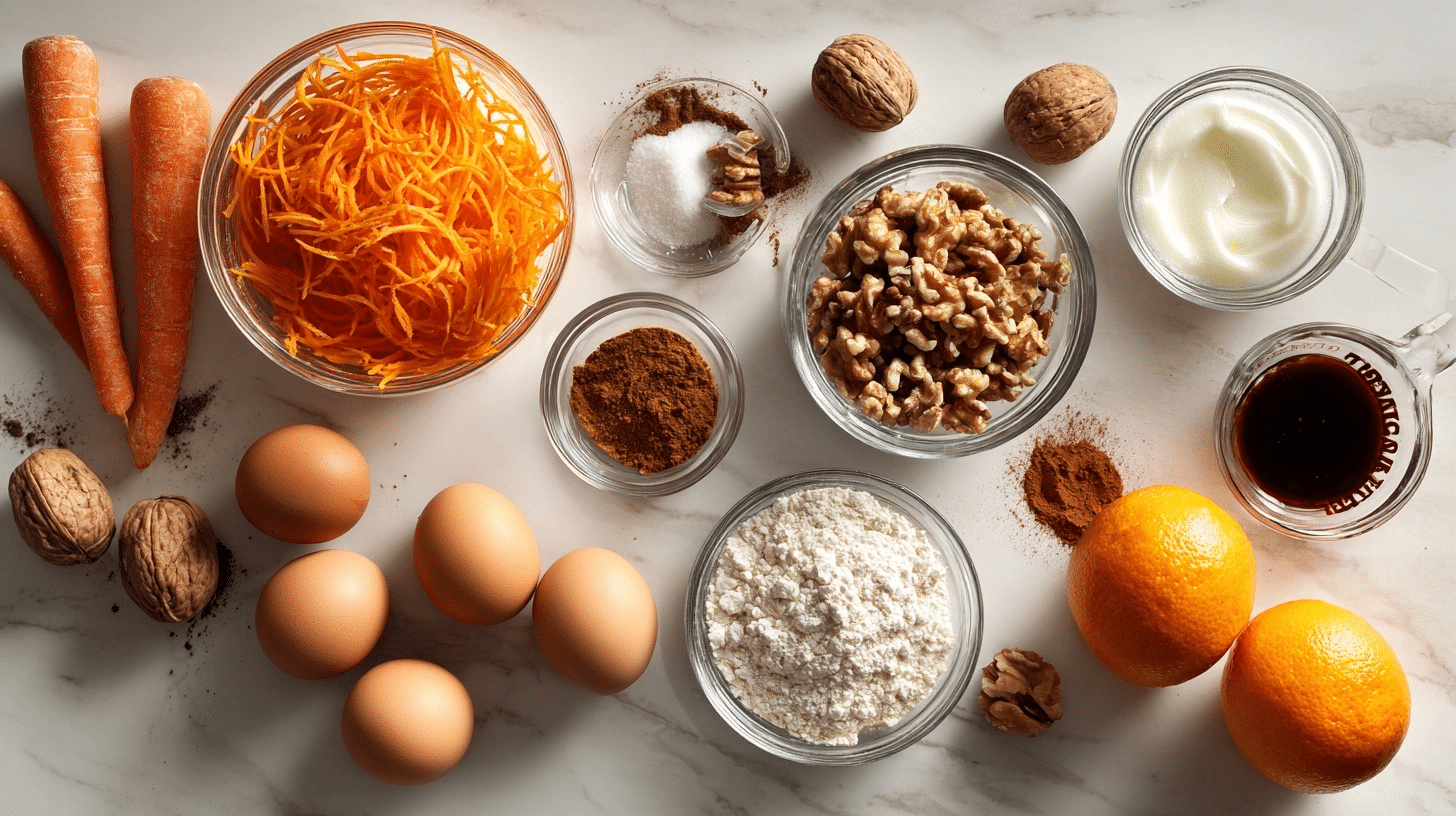
Every ingredient in this carrot cake works together to create moisture, flavor, and structure without flour or sugar. Below you will find exact measurements and why each item matters.
Carrots supply natural sweetness and plenty of moisture, eliminating the need for extra oil or sugar. Choose firm, bright carrots for the best flavor and color.
Oranges add bright acidity that balances the earthiness of the carrots. Both juice and zest are used, so select organic fruit if possible to avoid pesticide residue on the peel.
Eggs act as the primary binder, giving the cake structure and lift. Large eggs provide the right amount of liquid and protein.
Walnuts contribute healthy fats and a pleasant crunch. They also add protein, making each slice more satisfying.
Coconut oil keeps the crumb tender and imparts a subtle tropical note. Make sure it is melted and cooled slightly before mixing.
Vanilla extract enhances all the other flavors. Choose pure extract rather than imitation for the cleanest taste.
Cinnamon and baking soda work with the natural acids in the oranges to create rise. A pinch of salt sharpens every flavor.
Optional shredded coconut on top adds texture and visual appeal. Use unsweetened coconut to keep the recipe refined-sugar-free.
Instructions
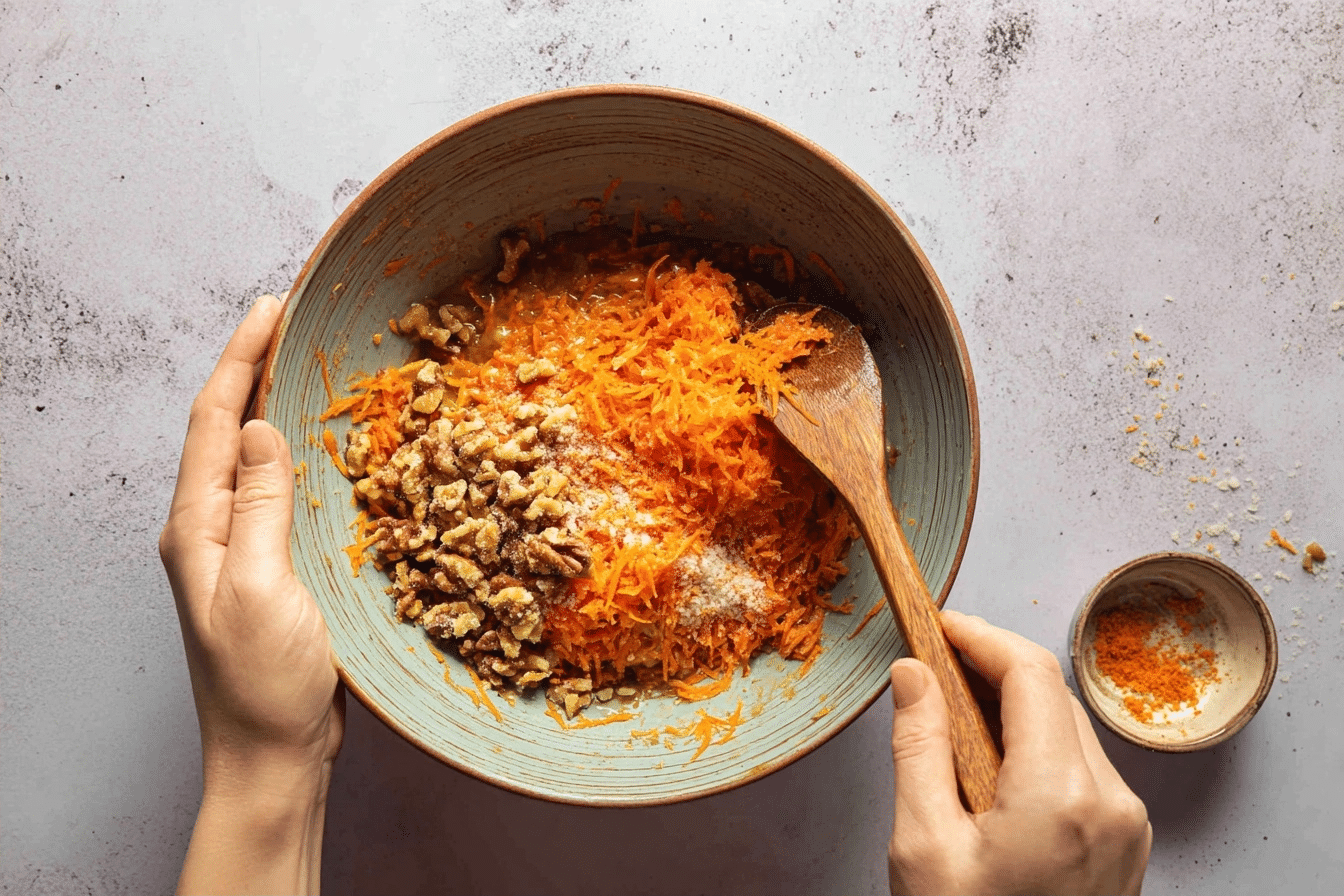
Follow these step-by-step directions to ensure your carrot cake turns out perfectly every time. The process is straightforward and requires only one mixing bowl.
Preheat your oven to 350°F and position a rack in the center. Proper oven temperature is crucial for even baking and a golden top.
In a large bowl, whisk the eggs, melted coconut oil, and vanilla extract until smooth and slightly frothy. This incorporates air and helps the cake rise without flour.
Stir in the orange juice and zest. The acid from the juice reacts with the baking soda, creating tiny bubbles that lighten the batter.
Add the grated carrots, chopped walnuts, cinnamon, baking soda, and salt. Fold gently with a spatula until no dry streaks remain.
Grease an 8- or 9-inch round cake pan or line it with parchment paper. Pour the batter in and smooth the surface with the spatula.
Bake for 35-40 minutes. Start checking at 35 minutes; the top should spring back lightly when touched and a toothpick should come out with a few moist crumbs.
Remove the pan from the oven and place it on a wire rack. Cool the cake in the pan for 15 minutes, then invert onto the rack to cool completely.
Once cooled, sprinkle with shredded coconut or extra walnuts if desired. Slice and serve at room temperature for the best texture.
Conclusion
This carrot cake proves that healthy desserts can be every bit as satisfying as traditional versions. With simple ingredients and minimal prep, you can enjoy a slice any day of the week.
Keep this recipe on hand for holidays, potlucks, or quiet evenings when you crave something sweet without the guilt. Your family will ask for it again and again.
Print
Flourless Carrot Cake
- Total Time: 55 minutes
- Yield: 8 servings
- Diet: Gluten-Free, Paleo, Dairy-Free
Description
A moist, aromatic carrot cake sweetened only with carrots and oranges. No flour, no sugar, just wholesome ingredients.
Ingredients
- 3 large carrots, peeled and grated
- 2 oranges, juice and zest
- 4 large eggs
- 1 cup chopped walnuts
- ½ cup coconut oil, melted
- 1 teaspoon vanilla extract
- 1 teaspoon ground cinnamon
- ½ teaspoon baking soda
- Pinch of salt
- Optional: shredded coconut for topping
Instructions
- Preheat oven to 350°F. Grease or line an 8-9 inch round cake pan.
- In a large bowl, whisk eggs, melted coconut oil, and vanilla until smooth.
- Stir in orange juice and zest.
- Add grated carrots, walnuts, cinnamon, baking soda, and salt. Fold gently until combined.
- Pour batter into prepared pan and smooth the top.
- Bake 35-40 minutes until a toothpick comes out with moist crumbs.
- Cool in pan 15 minutes, then transfer to a wire rack to cool completely.
- Top with shredded coconut or extra walnuts before slicing.
Notes
For extra sweetness, add two crushed dates. Muffins bake in 20-25 minutes. Serve with Greek yogurt or coconut whipped cream.
- Prep Time: 15 minutes
- Cook Time: 40 minutes
- Category: Dessert
- Method: Baking
- Cuisine: American
Frequently Asked Questions
Can I make this carrot cake nut-free?
Yes. Replace the walnuts with pumpkin seeds or simply omit them. The cake will still be moist and flavorful thanks to the carrots and coconut oil.
How do I store leftovers?
Wrap slices tightly and refrigerate for up to five days. For longer storage, freeze individual portions for up to three months.
Can I use a different oil?
Avocado oil or melted ghee both work well. Choose an oil with a high smoke point to maintain the cake’s delicate flavor.
Is this carrot cake suitable for diabetics?
The recipe contains no added sugar and relies on whole-food sweetness. However, individual blood-sugar responses vary, so monitor your levels and consult a healthcare provider.
Can I turn this into cupcakes?
Absolutely. Divide the batter among twelve muffin cups and bake at 350°F for 20-25 minutes. Cool completely before storing.